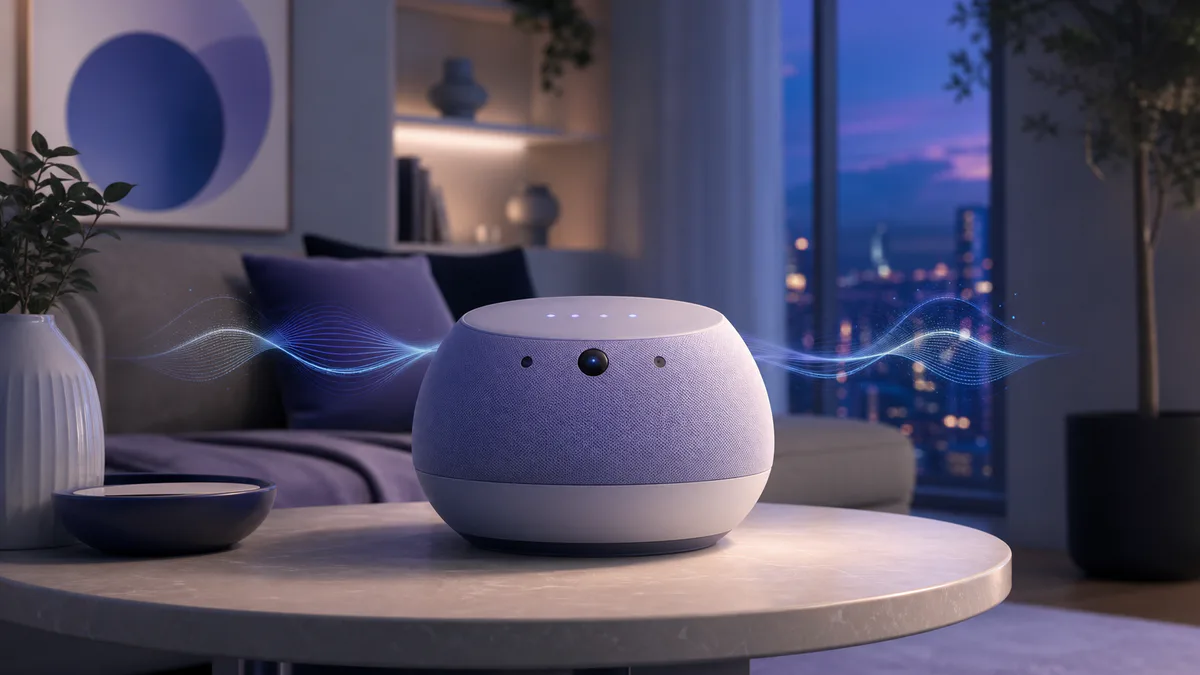
OpenAI’s reported screenless ChatGPT speaker is an unusual concept, but most buyers should not delay a purchase for it. The available reports describe the intended format, not its price, reliability, privacy controls or everyday value. Those details will determine whether dedicated hardware offers more than convenient voice access to ChatGPT.
What has actually been reported
The Next Web reports that OpenAI’s first consumer device designed with Jony Ive is a mobile, screen-free smart speaker for the home, positioned as a humanlike companion. Engadget describes it as rechargeable and intended to feel like a physical manifestation of ChatGPT.
Other reports add limited hardware detail:
- Interaction: The Verge says users would be able to talk with ChatGPT through the speaker.
- Hardware: The Decoder reports plans for a camera, sensors and moving mechanical parts.
- Timing: The Verge says OpenAI may announce the device this year.
This is not enough to judge the finished product. The reports do not establish how the camera and sensors would be used, what the mechanical components would do or whether the speaker would improve routine tasks. Until OpenAI provides firm details, “humanlike companion” is positioning rather than a demonstrated capability.
Dedicated hardware must add practical value
Spoken ChatGPT access is the clearest reported function, but that alone does not justify another device. The relevant test is whether dedicated hardware makes frequent household tasks faster, easier or more accessible.
An Android Police writer said pairing Gemini with Google Sheets changed their workflow enough that they stopped downloading productivity apps. Separately, 9to5Google reports that Spotify is rolling out an AI chatbot for commands, prompts and questions about media. Neither example proves that software can replace a home speaker. They do show how AI functions can be added to services people already use.
Buyers should compare the reported device with current options through our smart-speaker comparison. Compatibility, repeated usefulness and reliability matter more than a polished conversation demonstration. A dedicated ChatGPT speaker must remain useful after the novelty fades.
A screenless camera raises privacy and security questions
A screenless design removes one place where permissions, account activity and sensor status might be displayed. The reported camera, sensors and moving parts therefore require clear explanations and controls.
Before buying, consumers should expect OpenAI to disclose:
- What each sensor captures and when it operates.
- How users can identify active camera or microphone use.
- Whether processing takes place on the device or elsewhere.
- How recordings and conversation data can be reviewed or deleted.
- Whether physical controls can disable the camera and microphone.
- How the device treats guests and other household members.
The purpose of the moving components also matters, particularly if they change what the camera or sensors can detect. Humanlike behaviour should not make the hardware’s operation harder to understand.
Connected accounts create a separate concern. The Hacker News reports that researchers identified a Claude for Chrome flaw that could let another rogue browser extension trigger tasks involving Gmail, Google Docs and Calendar. This does not show that OpenAI’s reported speaker has the same weakness. It illustrates the consequences of giving an AI assistant access to several services.
If the speaker can act through third-party accounts, buyers should look for limited permissions, clear activity records, straightforward revocation and prompt security updates. Our AI coverage tracks developments in assistants and connected services, while the glossary explains common terminology.
Support will be part of the product
Conversational ability does not guarantee effective customer service. Wired recounts a missing ebike delivery case in which attempts to obtain help led to a frustrating chatbot-based support experience. That case was unrelated to OpenAI hardware, but it shows why access to accountable human support still matters.
Before purchase, check for clear warranty terms, routes to human assistance and defined procedures for account, privacy and hardware faults. These basics are particularly important for a device combining software, sensors and mechanical components.
Should you wait?
Most buyers should not wait solely for this reported device. There is no firm basis yet for assessing its everyday performance, privacy controls, integrations, support or long-term usefulness.
Waiting may make sense for committed ChatGPT users specifically interested in dedicated hardware. Even then, the sensible point to decide is after an official announcement and independent testing. The speaker should be judged on durable advantages over existing products, not on whether it appears humanlike in a demonstration.