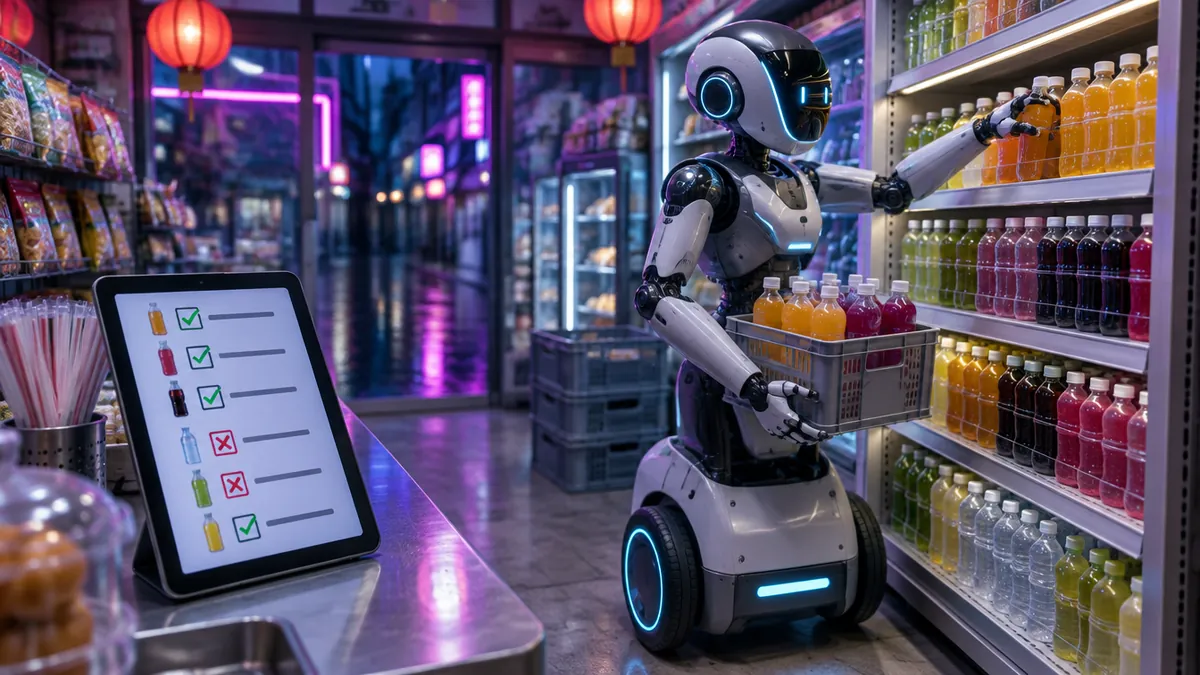
A 24-hour trial inside a working Shanghai convenience store has given humanoid robot buyers something rare: real pass/fail data instead of a staged demo. According to The Robot Report, six AGIBOT G2 robots completed 1,730 tasks over the trial, covering customer service, retail operations and embodied AI capabilities. Only four of the six passed the performance assessment.
That split matters more than the headline task count. A vendor can always generate a large number next to a demo; what buyers need to know is the pass rate under real operating conditions, and here it was four out of six. For anyone comparing humanoid robot specs before a purchase or deployment decision, four of six is the number worth remembering from this week, not 1,730.
What 1,730 tasks does and doesn't tell you
The Robot Report's figures describe the volume and category of work (customer service, retail operations, embodied AI tasks) but not a task-level breakdown of what the two failing units got wrong, or why. Without that detail, it is not possible to say whether the failures were hardware (grip, balance, battery), software (perception, task planning) or environmental (store layout, lighting, foot traffic). That gap is exactly why this trial should be read as a data point, not a verdict.
It is, however, a useful data point. A controlled demo tells you what a robot can do once, on a stage, with an engineer nearby. A 24-hour run in a functioning retail store, with two of six robots failing the performance assessment, tells you something closer to what deployment risk actually looks like. That is the distinction buyers evaluating the category need to keep in front of marketing copy: research preview, not product, until the pass rate climbs and the failure modes are published.
Industrial and energy trials: announced, not running yet
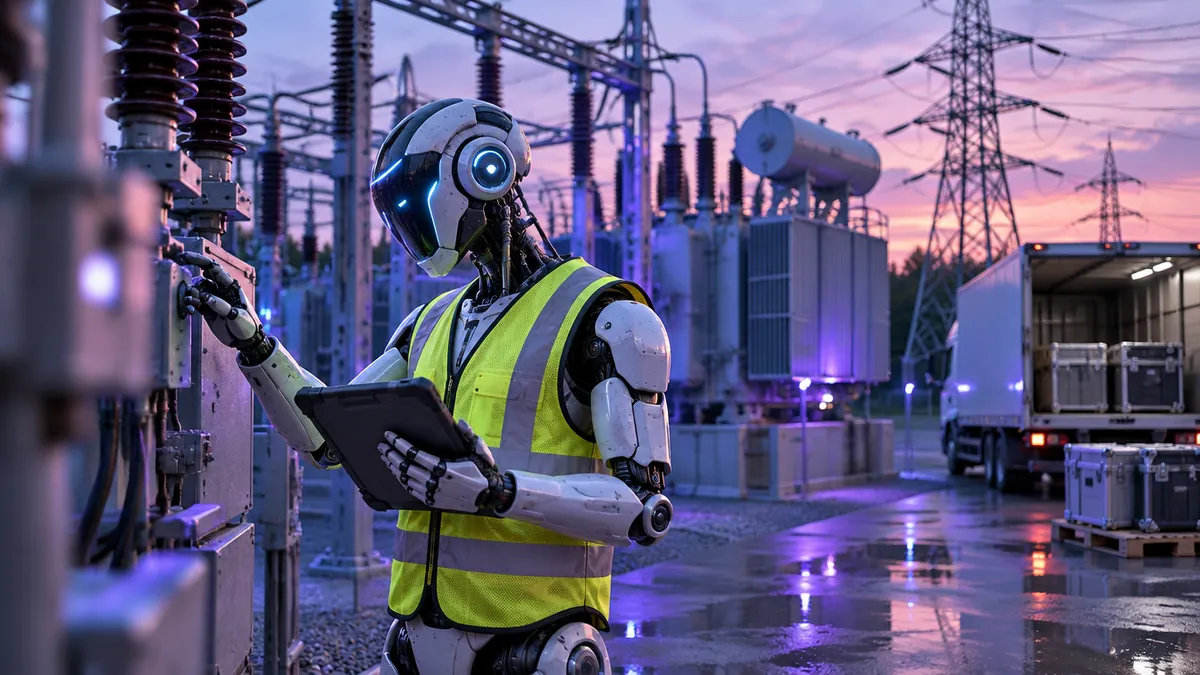
The rest of this week's cluster shows the same split between announced and operating. Neura Robotics, E.ON and enviaM announced a partnership to develop physical AI applications for electricity networks, according to Robotics & Automation News; the initial real-world trials aren't planned until 2027. That is a reminder that a partnership announcement and a deployed robot are not the same thing, even for well-funded players.
Expoline, by contrast, has already closed a project rather than announcing one: Robotics & Automation News reports Expoline completed an international multimodal transportation and on-site logistics project involving advanced humanoid robots. Few details are available on scale or robot model, but a completed logistics engagement is a different category of evidence than a trial date on a calendar, and it belongs on the "shipped" side of the ledger alongside the AGIBOT G2 trial.
Geographic and corporate expansion continues regardless
XPENG is expanding its UK operations beyond electric vehicles to include robotaxis and humanoid robots, part of what Robotics & Automation News describes as a long-term growth strategy. For buyers tracking which manufacturers are building distribution and service infrastructure outside their home market, this is worth watching on its own terms. XPeng's IRON humanoid program moving into a new region is a market-access story, not a capability one; it says nothing about how IRON would perform in a comparable store trial.
Separately, GENTO presented humanoid robots and a new dexterous hand at CoRL 2026, built on a hardware stack Tianji Intelligence has been developing since 2015, per Robotics & Automation News. That is a long development history behind a conference reveal, though a CoRL presentation remains an academic and industry showcase, not a commercial deployment record.
The buying-decision takeaway
Taken together, this week's items split into two groups. On the operating side, with imperfect results: AGIBOT G2's 1,730-task trial and its four-of-six pass rate, and Expoline's completed logistics project. On the announced side, not yet running: Neura Robotics' 2027 energy trials, XPeng's UK expansion, and GENTO's conference-stage reveal.
For buyers and operators deciding whether humanoid robots are ready for commercial deployment or still pilot-stage, the honest read is: closer than a keynote demo, not yet a settled purchase decision. A four-of-six pass rate in a real store is genuine progress over a scripted stage demo, but it is also a long way from the reliability threshold that would justify unattended commercial deployment at scale. Track the humanoid robot price tracker and the best humanoid robots ranking as more operators publish pass/fail data rather than task counts: that is the metric that will actually separate shippable hardware from research previews.
Sources: The Robot Report, Robotics & Automation News
Written with the help of AI tools, from published sources, under our editorial rules. Illustration generated with AI. No commission on purchases. Learn more