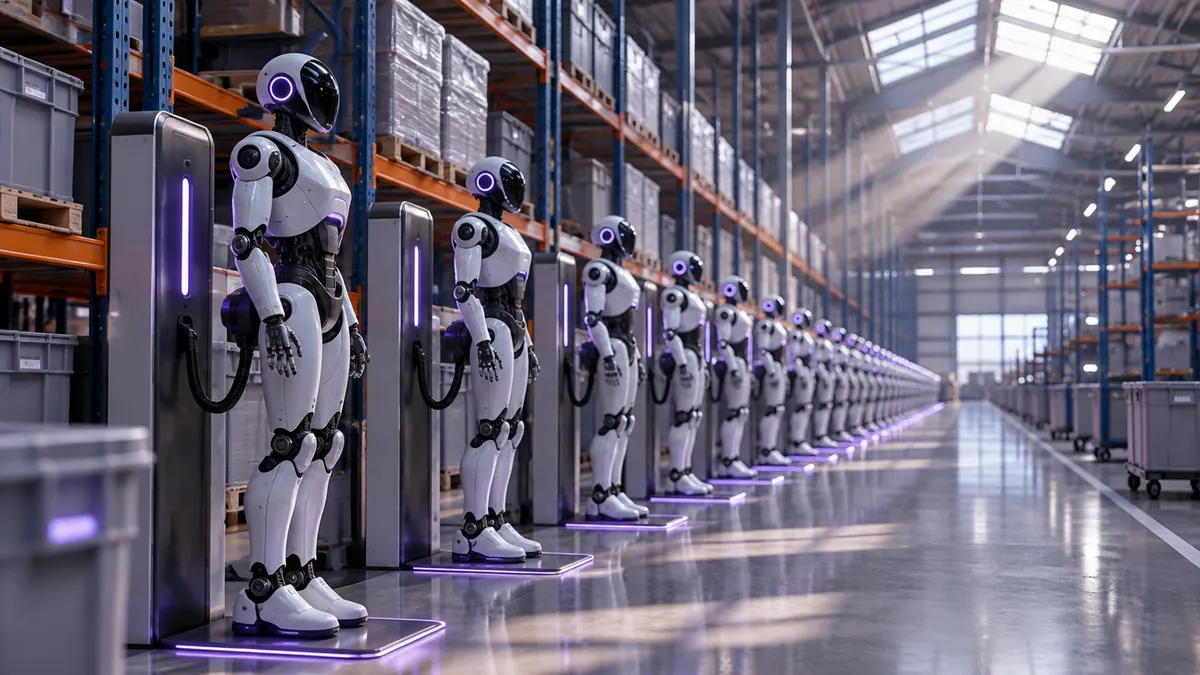

GXO Logistics has signed an agreement with Apptronik to expand deployment of Apptronik's humanoid robotics technology at scale, according to Robotics & Automation News. The plan covers a rollout of up to 1,000 humanoid robots, delivered through a Robotics-as-a-Service (RaaS) model rather than a direct equipment purchase. GXO executive Patrick Kelleher is named in connection with the agreement.
The announcement is specific: a named executive, a named vendor, a unit ceiling. What it is not is proof that humanoid robots are ready for continuous warehouse work. That distinction, between a commercial commitment and a solved engineering problem, is the one worth holding onto through the rest of this week's robotics news.
Why RaaS changes the calculus
The detail that matters most here is not the robot count, it is the commercial structure. Robotics-as-a-Service converts humanoid access from a capital purchase into a recurring service commitment, closer to leasing a fleet of trucks than buying one. That lowers the upfront barrier to trying humanoids at scale, but the economics depend on contract terms, support obligations and exit clauses that the public announcement does not detail.
For buyers comparing options, this is the question to put to any humanoid vendor now: is the deal a sale, a lease, or a service contract, and what happens to uptime guarantees and software updates under each. Our humanoid comparison tool and price tracker are built around that kind of comparison: pricing model is now as relevant as specs.
Apptronik has positioned its humanoid platform for logistics and industrial work rather than consumer or research use. A GXO deal at this scale, assuming it proceeds as announced, would be a real test of whether that positioning holds up in continuous warehouse operation rather than staged demonstrations.
Not the only logistics automation move this week
GXO and Apptronik are not acting in isolation. DHL Supply Chain is separately piloting adaptive AI-powered robots and introducing AI orchestration into live warehouse operations, per Robotics & Automation News. That is a different approach: software orchestration layered onto robotics already in place, rather than a large fixed humanoid order. Both paths point at the same problem, that warehouse automation needs an AI layer that can adapt to variable tasks, not just execute fixed routines.
On the supply side, Agile Robots, which builds humanoids among other robot types, raised $500 million to increase production capacity, according to The Robot Report. Funding aimed specifically at manufacturing capacity, rather than R&D, suggests at least one humanoid maker is betting on near-term order volume rather than further prototyping. Whether that capacity gets absorbed by deals like GXO's, or by other verticals, remains to be seen.
The capability gap buyers should keep in view
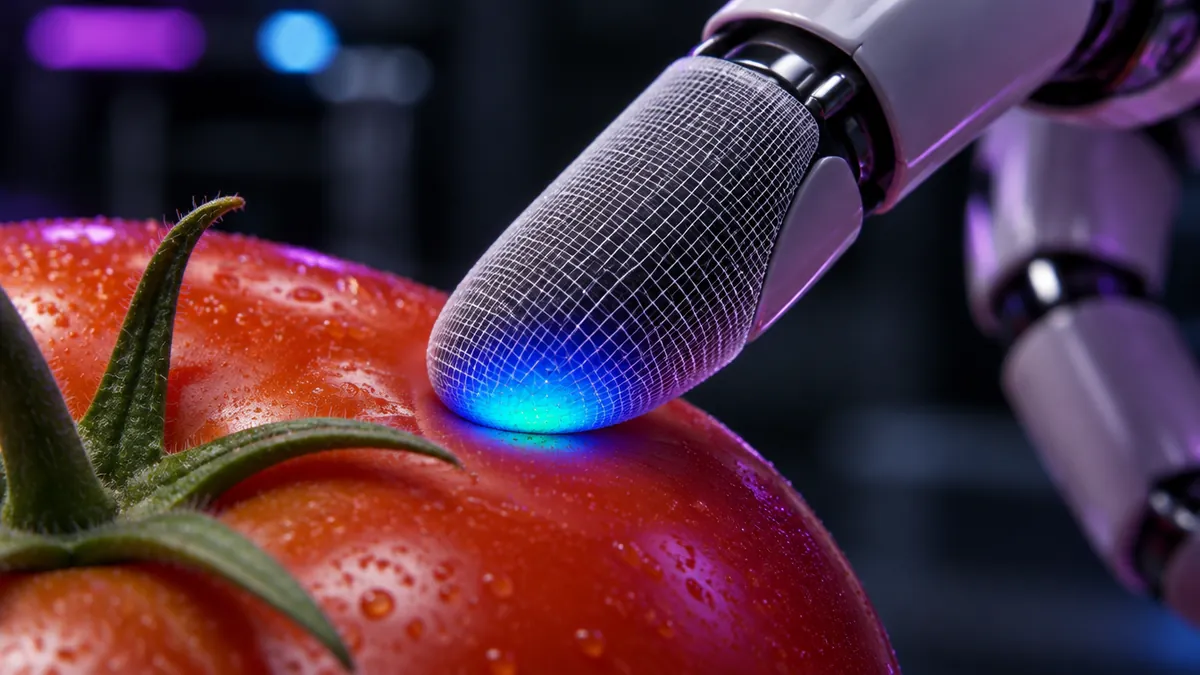
Scale commitments are easy to announce. Reliable manipulation in a live warehouse is harder. Robotics & Automation News ran an opinion piece arguing that physical AI needs a better sense of touch, pointing to Moravec's paradox (the long-observed problem that tasks trivial for humans, like grasping an irregular object or adjusting grip under load, remain disproportionately hard for robots) as a reason humanoid manipulation keeps lagging behind locomotion and perception.
The Robot Report makes a related point: many robots that fail on the factory floor fail not because the hardware cannot do the task, but because programming and reprogramming the robot for task variation is too hard and too slow. AI-native robotics, where the system reasons about a task rather than following a rigid script, is the likely fix the outlet points to. That is also the thesis behind Google DeepMind's Gemini Robotics 2.5, a newly launched vision-language-action model aimed at improving robots' dexterity for industrial and everyday tasks, per Robotics & Automation News.
Together, these stories put the GXO-Apptronik deal in context: a RaaS commitment at scale is a meaningful commercial signal, not evidence that manipulation and adaptability are solved problems. GXO and Apptronik have not published deployment timelines, site counts or performance benchmarks alongside the agreement. Until those appear, this is a rollout plan, not a rollout.
What this means for operators evaluating RaaS
For a logistics or warehouse operations leader weighing a pilot against a commitment, three things matter. Treat the RaaS contract terms as seriously as the spec sheet: support, update cadence and failure remediation matter as much as payload and battery life. Watch for independent performance data from this deployment as it rolls out, not just the announcement. And compare Apptronik against other logistics-focused humanoids on our best humanoid robots ranking before assuming scale alone validates the technology.
The honest read: this is a large, credible commercial signal for humanoid robotics in logistics, backed by a named executive and a specific unit ceiling, which is more than most industry announcements offer. It is still a plan, not a delivered fleet, and the manipulation and programming challenges raised elsewhere in this week's coverage apply to Apptronik as much as to any other humanoid maker. Read the RaaS structure as the real story here, and wait for deployment data before treating 1,000 units as a settled outcome.
Sources: Robotics & Automation News, The Robot Report
Written with the help of AI tools, from published sources, under our editorial rules. Illustration generated with AI. No commission on purchases. Learn more