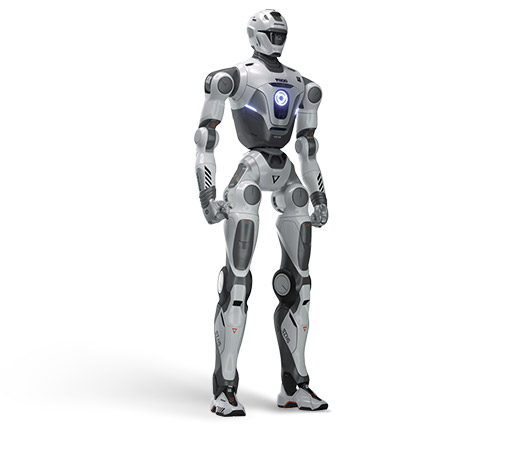
Flourish has priced its first home humanoid at $3,555. The Robot Report says the robot, called Flourish One, targets busy parents and is trained through a phone app rather than shipped with fixed routines. It is one of the only named consumer entry points into humanoid ownership this cycle, which makes it worth separating the price and the hardware from the pitch.
What Flourish One is
The Robot Report describes Flourish One as cloud-trained chore automation: owners personalize the robot's behavior by phone instead of relying on manufacturer-set routines. The compute underneath is Raspberry Pi hardware, a notable choice. Raspberry Pi is a low-cost, widely used single-board computer, not the kind of custom compute stack most industrial humanoid builders design around. That likely keeps the price down, but it also sets expectations: this reads as an early, accessible home device, not a platform built for complex, high-speed manipulation.
Where $3,555 sits
Buyers should check Flourish One against the wider field before deciding. Compare Robots tracks list prices across the category on the humanoid price trackerwith full specs on the humanoid comparison page and current rankings at best humanoid robots. At this stage, Flourish One is a research-preview product built around one chore-automation use case, not a general-purpose humanoid competing on raw capability. Treat it as a paper spec until independent reviews of household use exist.
What happens when a humanoid ages out
Figure has been decommissioning part of its own fleet. Interesting Engineering reported that Figure sent a group of retired humanoid robots into a vat of molten steel, in what the outlet described as a Terminator-style event. The staging is beside the point: a humanoid maker is already retiring hardware rather than reselling or redeploying it. That is a useful data point for anyone weighing a $3,555 purchase. Humanoid hardware has a working life, and this category has no track record yet on resale or trade-in value. A buyer should assume the hardware could carry no residual value once its maker moves to a newer generation.
Signals the category is still maturing
Other items in recent coverage point the same direction: humanoid robotics is professionalizing its data and engineering practices even as consumer products like Flourish One try to reach ordinary households.
- Innodata has opened a motion-capture lab using Vicon cameras to measure human movement with sub-millimeter accuracy, collecting real-world training data meant to help humanoids move more like people, per The Robot Report.
- ForceN is running a session at RoboBusiness on force and torque sensing for humanoids, including how to use those sensors without breaking them, a sign that manipulation hardware remains a working problem.
- The Robot Report's State of Robots in Manufacturing coverage looks at recent automation advances, including the potential of humanoids and AI.
- A separate Robot Report piece on "Robonomics" examines economic autonomy for robots doing deliveries or household chores, including the idea of crypto wallets for humanoids, a framing that is still conceptual rather than deployed.
The buying decision
None of this makes Flourish One a bad purchase for a parent curious about chore automation at this price. But it means treating it as an early, phone-trained research preview, not a finished appliance. Check specs on the comparison pagewatch pricing on the trackerand follow ongoing humanoid coverage before deciding whether to be an early adopter of hardware whose resale value, service life, and software roadmap are all still unproven.